
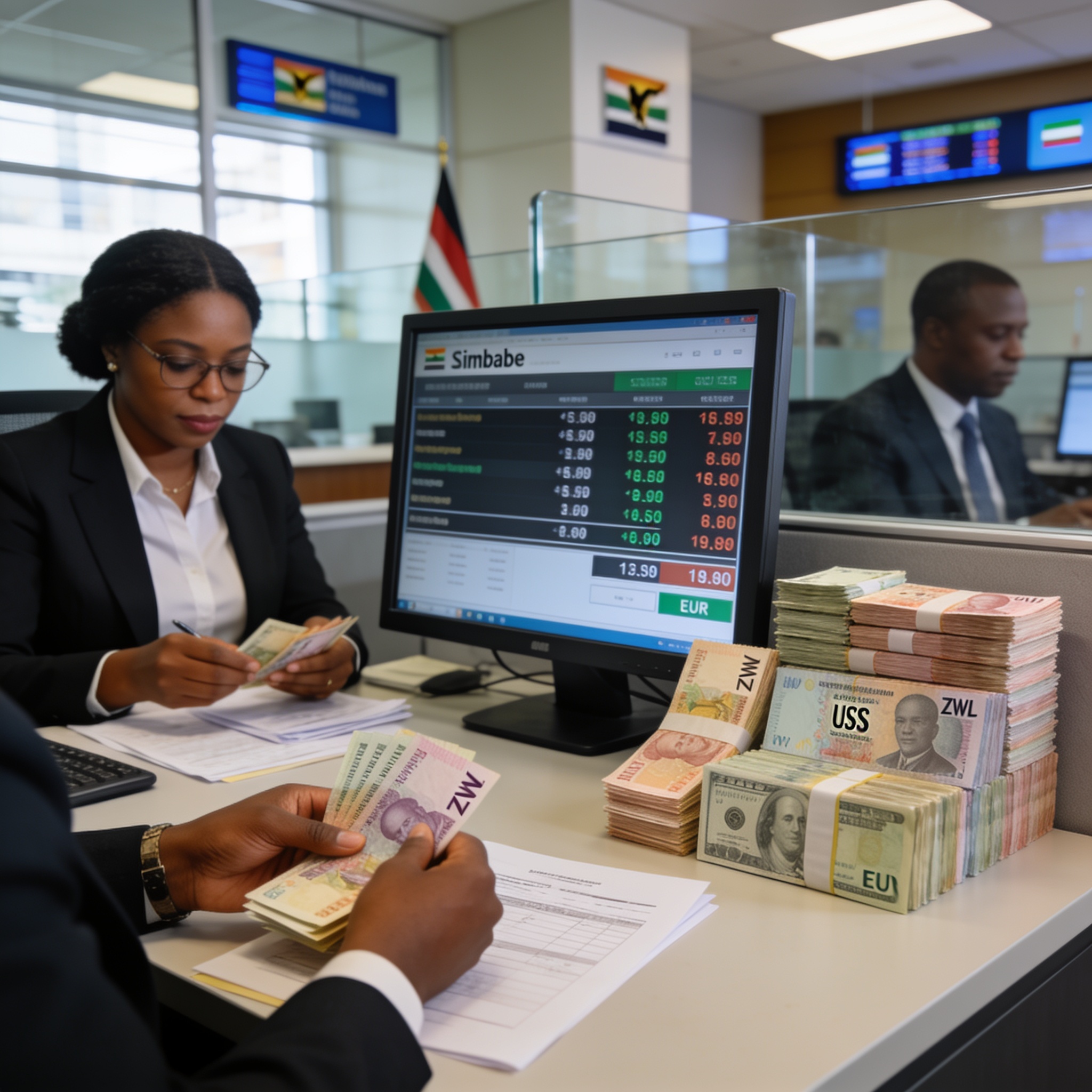
Zimbabwean authorities have ruled out compelling holders of foreign currency accounts to convert their balances into local currency, seeking to calm savers and businesses as the country lays the groundwork for a mono-currency system. Two senior officials made the commitment publicly, signalling that the transition will not be used to sweep private foreign exchange holdings into the domestic unit.
The assurance carries particular weight in a market where memories of past currency overhauls remain raw. Since the multicurrency arrangement was adopted in 2009, Zimbabweans have repeatedly watched savings lose value during monetary transitions, and dollar-denominated accounts have become the default store of value for households, informal traders and formal companies alike.
Why the commitment matters
For ordinary depositors, the message is straightforward: money held in foreign currency accounts remains theirs to keep, spend or transfer as they choose. For companies, it removes one of the biggest uncertainties hanging over cash management decisions — whether working capital parked in hard currency could be converted at a rate they do not control.
The reassurance is also aimed at the pricing behaviour that has frustrated policymakers. When businesses doubt the durability of the local unit, they hedge by quoting in United States dollars, indexing prices to the parallel market rate, or holding stock and cash offshore. That behaviour feeds inflation expectations and undermines the very stability a mono-currency is meant to deliver.
Analysts caution that a verbal commitment is only the first step. What the market will watch closely is the statutory framework that accompanies the transition — particularly whether the rules preserve the voluntary nature of conversion, guarantee access to foreign currency for importers and travellers, and spell out how existing contracts and loans will be treated.
Business confidence gets a second boost
The currency signal landed alongside other developments that point to a broader effort to unlock private sector activity. Reserve Bank of Zimbabwe Governor Dr John Mushayavanhu welcomed a US$30 million facility signed between CABS and British International Investment, the United Kingdom’s development finance institution, describing it as a direct response to what he called the private sector’s binding constraint.
The package is designed to channel targeted financial support towards small and medium enterprises and exporters — segments that have long complained about the cost and scarcity of medium-term funding. Access to affordable capital, rather than demand, is frequently cited by local producers as the barrier that prevents them from scaling output and competing regionally.
Earnings and stockpiles point to resilient demand
Listed retailer and distributor Axia Corporation offered another indicator that consumer demand is holding up. The Victoria Falls Stock Exchange-listed group reported a 36 percent rise in profit attributable to equity holders, up from US$5.06 million in the prior comparable period, while headline earnings per share climbed 33 percent to 1.21 US cents. Management credited stronger sales volumes and improved cash generation for offsetting a heavier tax burden.
The group is also building unusually large inventory buffers ahead of the November-December peak trading season. Chief executive officer Ray Rambanapasi said the company is carrying more stock than its normal two-month cover after port delays disrupted the flow of imported goods, a reminder that supply chain friction — not just exchange rate policy — remains a live risk for Zimbabwean traders.
What to watch next
- The legal instrument: The fine print of the conversion rules will determine whether the pledge is credible in practice, including any treatment of legacy balances and interest.
- Pricing behaviour: Whether retailers begin shifting more of their shelf pricing back into local currency will be an early test of confidence.
- Credit flows: How quickly facilities such as the CABS-BII line reach SMEs and exporters, and at what cost, will shape the investment response.
- Import costs: Continued container delays and freight bottlenecks could keep pressure on margins even if the currency environment stabilises.
For now, the official line is one of continuity rather than rupture: a mono-currency built on consent, not confiscation. Whether that promise holds will be judged less by statements in Harare and more by the decisions of depositors, shopkeepers and factory owners over the coming months.