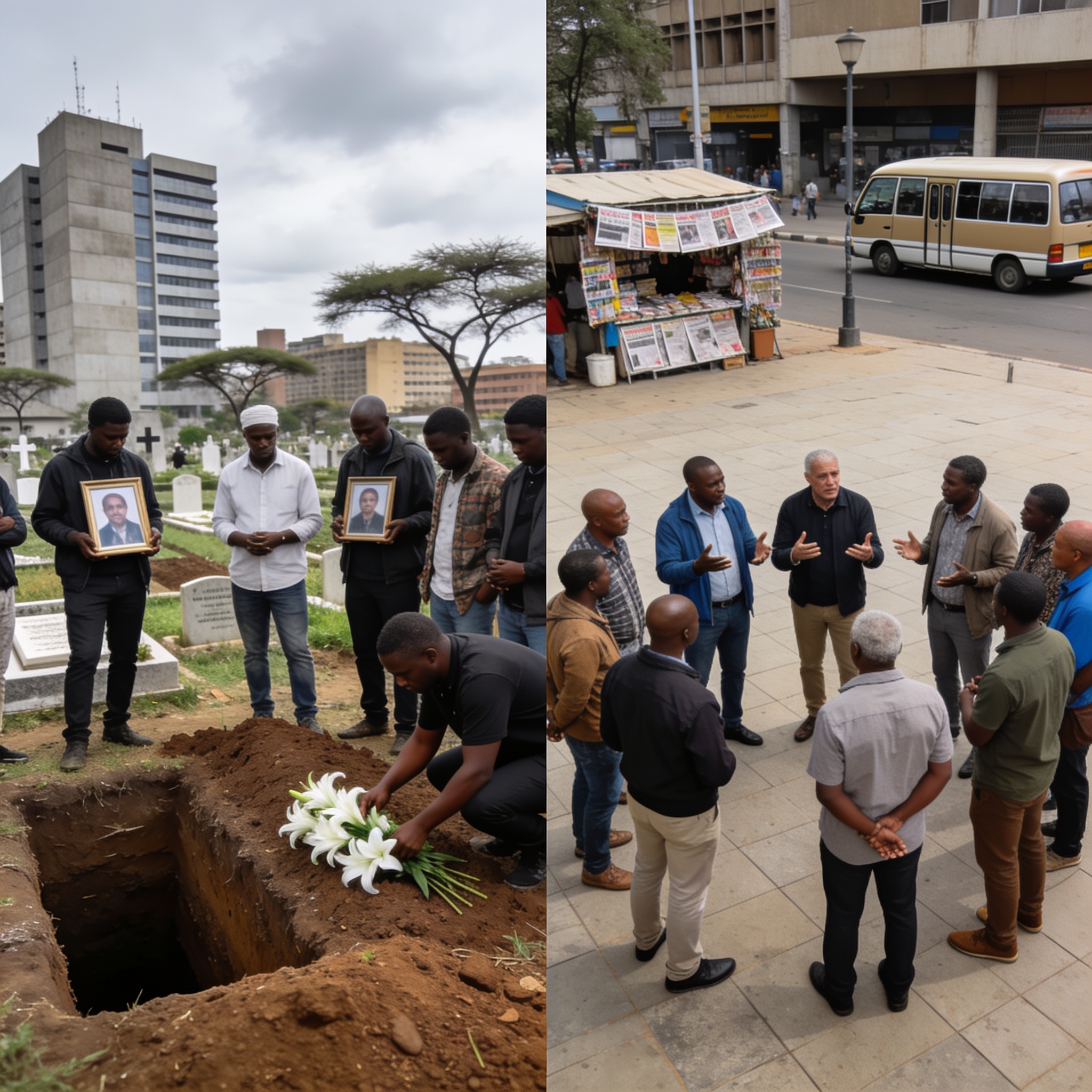
Harare — Days after a fatal helicopter accident near Marondera, Zimbabwe is measuring the event by more than grief. The loss of businessman Wicknell Chivayo, his wife Lucy, two pilots and a security aide has moved from tragedy into a national conversation about public mourning, state recognition, emergency response capacity and the limits of accountability in the country’s political economy.
At the centre of the debate is President Emmerson Mnangagwa’s decision to declare Chivayo a provincial hero. The move is understood to open the door to state support for funeral arrangements and to place the businessman within the country’s ceremonial memory. Supporters and relatives have framed it as respect for a prominent figure. Critics, however, have questioned whether a person linked to controversial government tender history should be elevated so quickly, and have urged more transparency around public procurement and public service delivery.
Forensic work continues as family rules out viewing
A family spokesperson said viewing remains was not possible because of the severity of injuries sustained in the crash, and that identification and forensic processes are still ongoing. Burial arrangements had not been announced as of 4 October 2026. The statement has deepened the shock around the accident, which occurred at a farm property outside Marondera in poor visibility conditions.
Because the investigation has not produced a final report, the causes remain open. Aviation observers in the region will watch for findings on weather, aircraft condition, maintenance records, crew experience and emergency access at the site. Those points will shape not only the funeral process but also future safety expectations for private air transport.
Mnangagwa’s road journey adds a symbolic turn
The president attended a graduation ceremony at Manicaland State University of Applied Sciences in Mutare, but chose to travel by road rather than by helicopter or fixed-wing aircraft. A presidential spokesman said weather conditions continued to make non-fixed-wing air travel unsafe. On the way back, the motorcade stopped at the Chivayo family residence in Gletwin, where Mnangagwa consoled relatives and supporters.
The journey itself has become part of the story. In a country where long road trips by presidential motorcade are logistically and financially visible, the decision to avoid air travel was read by some as caution and by others as a reminder of how unusual the crash environment was. The road trip also tied two national themes together: mourning and public accountability.
Emergency services become a second shock wave
Several commentators have shifted attention from the crash site to the response after the crash. Among the most pointed public voices is lawyer Fadzayi Mahere, who has asked whether the emergency services system failed victims who needed timely fire, ambulance and forensic support. Her comments reflect a wider complaint in Zimbabwe: public safety capacity in smaller cities and rural districts is often tested only after a tragedy.
The questions raised are simple, but the answers are not. Did local authorities have enough equipment, staffing and communication lines to reach an accident at a farm property? Why was emergency assistance reportedly delayed? Are regional hospitals and rescue units ready for high-casualty incidents? The answers matter beyond this case, especially in a country where road, rail and aviation accidents regularly expose gaps in public services.
Business, heritage and sport shape the wider October agenda
Zimbabwe’s national conversation on this date is not only about grief and accountability. Masvingo is preparing for the Great Zimbabwe Marathon, with organisers saying more than 800 runners have entered and that entries for the longest race have closed while shorter distance events remain open. The 18 October race now carries international athletics recognition, giving it added value beyond a local road race. For Masvingo, the marathon has become a platform for heritage promotion, hospitality revenue and national pride, with the finish set near the Great Zimbabwe site.
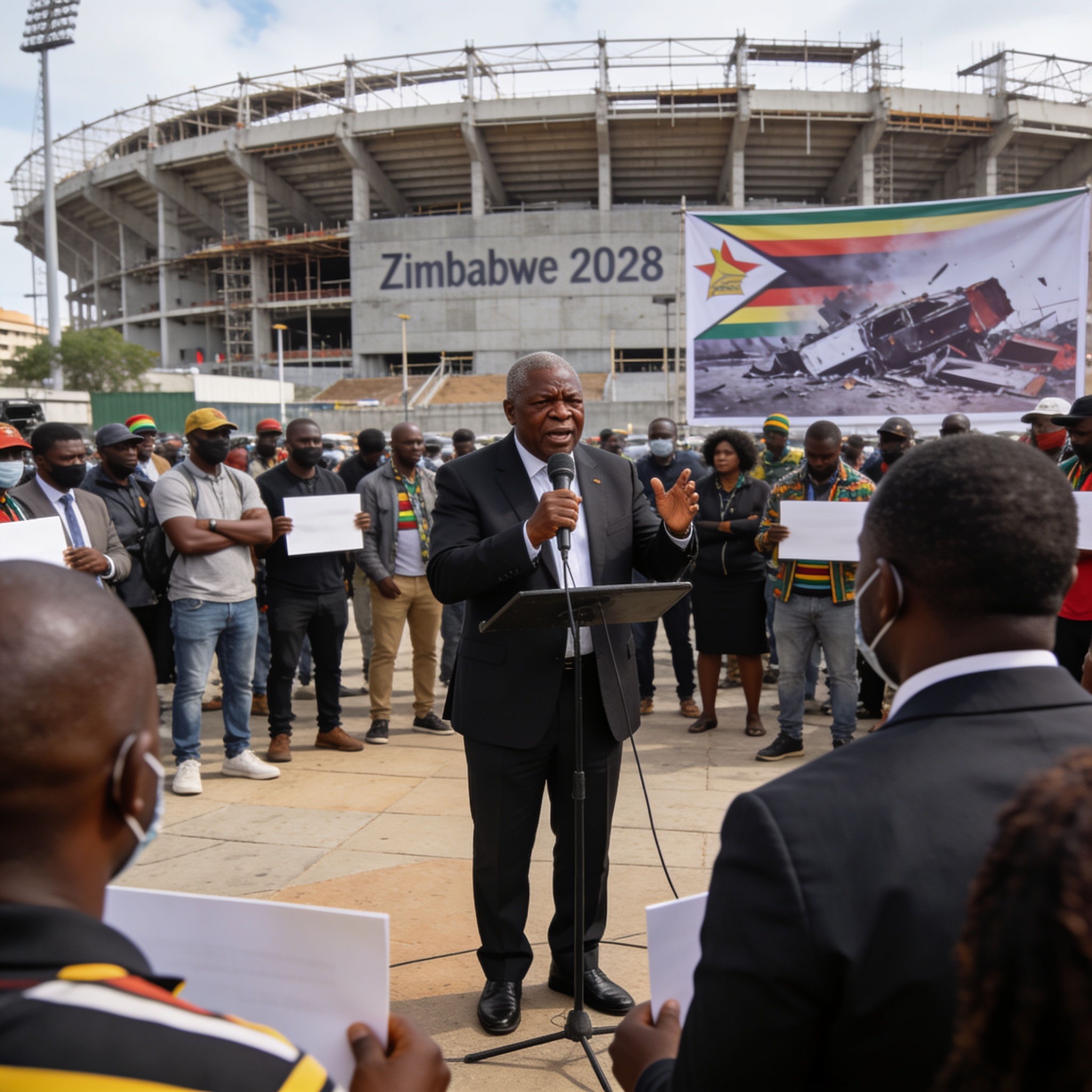
Football and civic events are also active. Highlanders are promoting a half marathon as part of the club’s centenary family day, while sports authorities and cities are watching the fate of the proposed 2028 Africa Cup of Nations joint bid. Botswana’s withdrawal has left Zimbabwe and South Africa to revise the submission after financial-guarantee concerns ended the three-country plan.
The reshaped bid creates opportunity and burden in equal measure. South Africa’s mature stadium network and travel infrastructure may make it the stronger practical host, while Zimbabwe’s recent stadium improvements and restored permission to stage international matches show progress. But continental hosting would still require major investment in venues, security, transport, health systems and accommodation. In a fiscal environment already under strain, those costs will be debated as fiercely as the sporting benefits.
COMESA, property and urban credibility: other economic themes
Business voices are also looking to Zimbabwe’s incoming COMESA chairmanship as a possible catalyst for industrial revival, especially in Bulawayo and the Midlands. Manufacturers and property developers hope the regional role will improve trade visibility and open doors to regional contracts. At the same time, the National Economic Consultative Forum has argued that Zimbabwe’s urban infrastructure deficit is more a credibility problem than a lack of financial instruments. Investors, the forum’s message suggests, need consistent rules, transparent procurement, reliable municipal finance and practical enforcement before they can commit long-term capital.
Politics and civic life beyond the capital
The Bulawayo Ward 1 by-election result, with ZANU-PF’s Mathias Tichaona Tsikira declared winner, underlines the competitive character of local government politics even when turnout is modest. In the same city, schools and cultural bodies are marking achievement and heritage work, while Bulawayo boxing advocates are using upcoming tournaments to show that the sport remains alive. These stories together sketch a more textured Zimbabwe: one where grief, campaigning, exams, festivals and public health all compete for attention on the same day.
What this moment reveals about Zimbabwe
Chivayo’s death has produced a national pause. One part of the pause is emotional: mourning, forensic dignity and family privacy. Another part is political: how public recognition is granted and to whom. A third is practical: whether emergency services, aviation oversight, health screening and urban infrastructure can rise to the scale of modern Zimbabwean life.
The coming days will be tested by funeral details, investigation updates, public procurement memory and the country’s ability to turn mourning into governance. For readers of this site, the broader lesson is that the most prominent stories in Zimbabwe rarely remain single-issue tragedies. They become mirrors reflecting the country’s unresolved demands for accountability, heritage, sport, regional integration and public service improvement.