
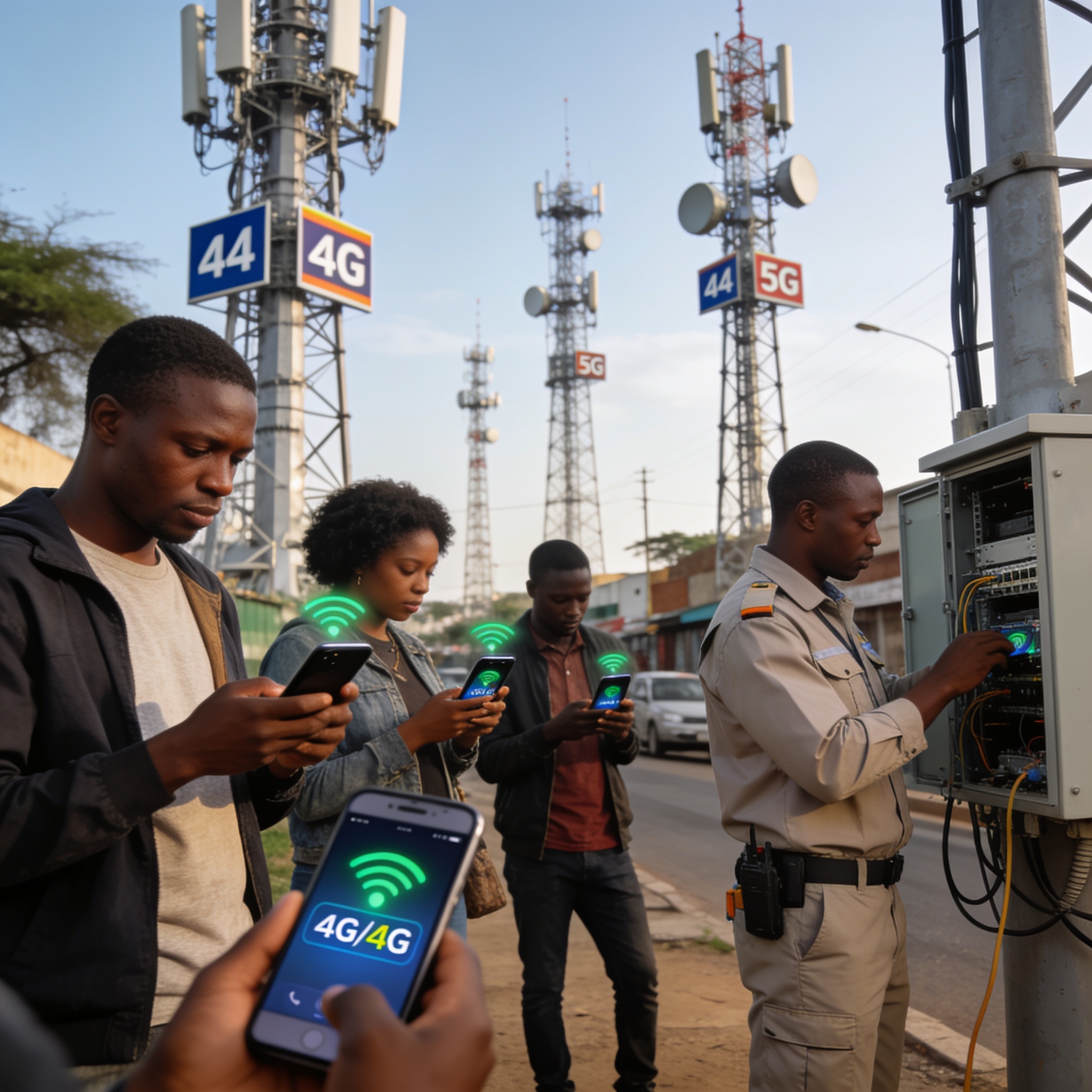
Econet Wireless Zimbabwe, the country’s dominant telecommunications provider, has confirmed that it will shut down its 3G network by the end of December 2027, ushering in a new era focused on faster 4G and 5G services. The announcement was made by Econet CEO Douglas Mboweni, who outlined a phased approach that will see 2G retired at a later, unspecified date.
According to Mboweni, only a small proportion of Econet’s customer base now relies on 3G, with the majority having already migrated to 4G and 5G. The company is actively encouraging remaining 3G users to upgrade their devices and will support rural subscribers with affordable handsets and flexible payment options. ‘We must give rural customers more time to replace their phones while supporting them with affordable handsets and flexible payment terms,’ Mboweni said.
The decision to phase out 3G aligns Econet with global trends, as operators worldwide repurpose spectrum for more advanced technologies. Rwanda has set June 2027 for its 3G shutdown, while South Africa has the same December 2027 deadline. Spectrum freed from 2G and 3G will be redeployed to boost 4G and 5G capacity, improving data speeds and network performance across Zimbabwe.
Econet’s network statistics reveal a significant 3G footprint: 2,071 3G base stations compared to 1,951 4G stations and just 353 5G towers. The company plans to invest hundreds of millions of dollars in expanding 4G and 5G infrastructure, with a particular focus on upgrading rural coverage to ensure that no community is left behind when 3G is retired. An independent power system is also being developed to improve network resilience amid ongoing electricity challenges.
However, the transition poses a real risk for consumers still using 3G-only devices. Global smartphone prices have surged due to an AI-driven memory chip shortage, nicknamed ‘RAMageddon’, making it harder for budget-conscious users to upgrade. Econet has urged handset suppliers to stop selling new 2G or 3G-only phones and is stepping up efforts to identify ‘grey handsets’—devices that are marketed as smartphones but fail to meet advertised specs. A detection system will alert customers and relevant authorities when such phones connect to the network.
For Zimbabwean consumers, the message is clear: when purchasing a new phone between now and December 2027, it is unwise to choose a device that does not support 4G. As Econet commands roughly 75% of mobile subscriptions in Zimbabwe, the phase-out will affect a large portion of the population. The company’s plan to keep 2G running for a longer period will allow older feature phones to remain operational for basic calls, but data services will become increasingly limited.
Ultimately, Econet’s move is a necessary step toward a more advanced digital economy. By focusing on 4G and 5G, Zimbabwe can improve internet access, enable new digital services, and remain competitive in the region. The challenge lies in ensuring that vulnerable groups, particularly in rural areas, are not excluded during the transition. Econet’s commitment to affordable handset programmes and network upgrades will be crucial in achieving a smooth migration.