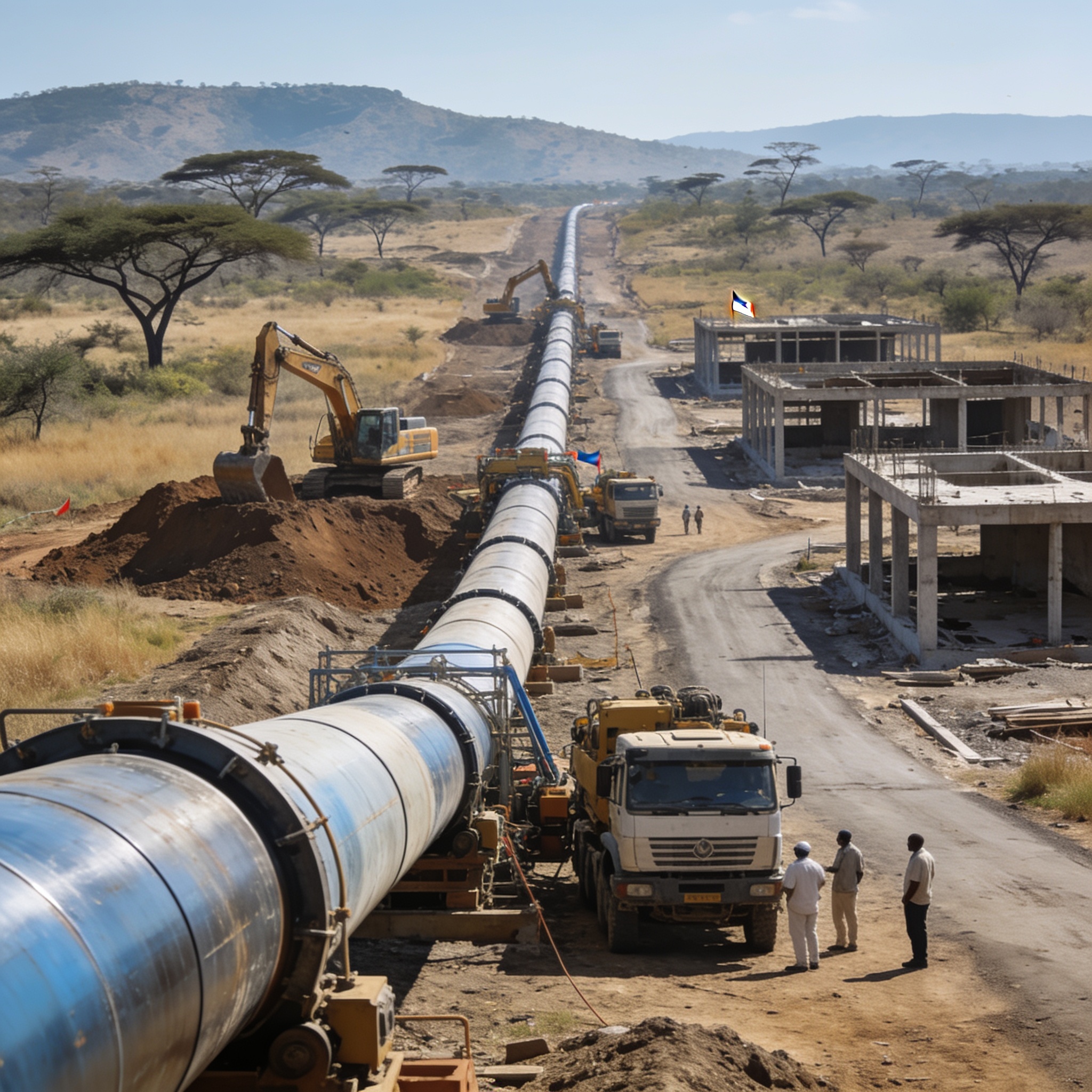
Zimbabwe’s Unfinished Business: Gwayi-Shangani Pipeline on a 217-Year Timeline as 226 State Projects Stall
Bulawayo’s wait for water from Gwayi-Shangani Dam now has a number attached to it, and the number is 217. That is how many years Bulawayo Mayor David Coltart calculates it would take to build the 252-kilometre pipeline if Treasury keeps releasing money at the pace recorded last year.
The warning landed just as government reported encouraging progress on a different piece of the same scheme — the 10-megawatt mini-hydropower station at Gwayi-Shangani, where civil works are said to be about three-quarters complete. Coltart welcomed that news, then pointed out where Bulawayo’s real interest lies.
“From a City of Bulawayo perspective our real interest is in the construction of the 252 km pipeline,” he said.
A pipeline measured in centuries
Citing a recent Zimbabwe National Water Authority (ZINWA) report, Coltart put the pipeline’s cost at US$543 million. Against that figure, he noted that government spent roughly US$2.5 million on the pipeline last year — a disbursement rate that, if unchanged, stretches completion far beyond the lifetime of anyone now living in the city.
The arithmetic is stark because the pipeline is not the only outstanding component. Alongside it sit booster pump stations and a water treatment plant, all of which must be funded, built and commissioned before a single litre reaches Bulawayo taps.
Dam nearly done, but the water cannot move
Progress on the dam wall has consistently outpaced the infrastructure needed to transfer its water. The 2026 Infrastructure Investment Programme reported the dam at 72.4 percent complete, with US$25.3 million made available during 2025 and completion projected for 2026 on the back of a ZiG273 million allocation.
The transfer system, by contrast, is far behind. A July progress report cited by CITE put the pipeline at only 16 percent completion and the booster pump stations at 18 percent, with the four major contract packages under the National Matabeleland Zambezi Water Project valued at about US$554.44 million. The pipeline contract alone is listed at US$175.14 million, pump stations at US$167.73 million, the treatment plant at US$81.25 million and pipe supply at US$130.33 million.
The pipeline was split among 12 contractors in March 2022, each allocated roughly 21 kilometres, but work stalled the same year over inconsistent funding. Designed to deliver 220 megalitres a day to Bulawayo, it remains the critical link between a dam that is almost finished and a city that still rations water.
Project documents suggest that about US$4 million a month now covers only the dam wall. The recommendation is to push monthly funding to US$8 million so that the hydropower station, low-lift pumping stations and other components can advance in parallel. In 2025, President Emmerson Mnangagwa directed Treasury to release US$5 million a month for strategic dams, but Treasury’s own reporting showed US$2.39 million going to the pipeline against US$25.3 million for the dam.
226 projects, and counting
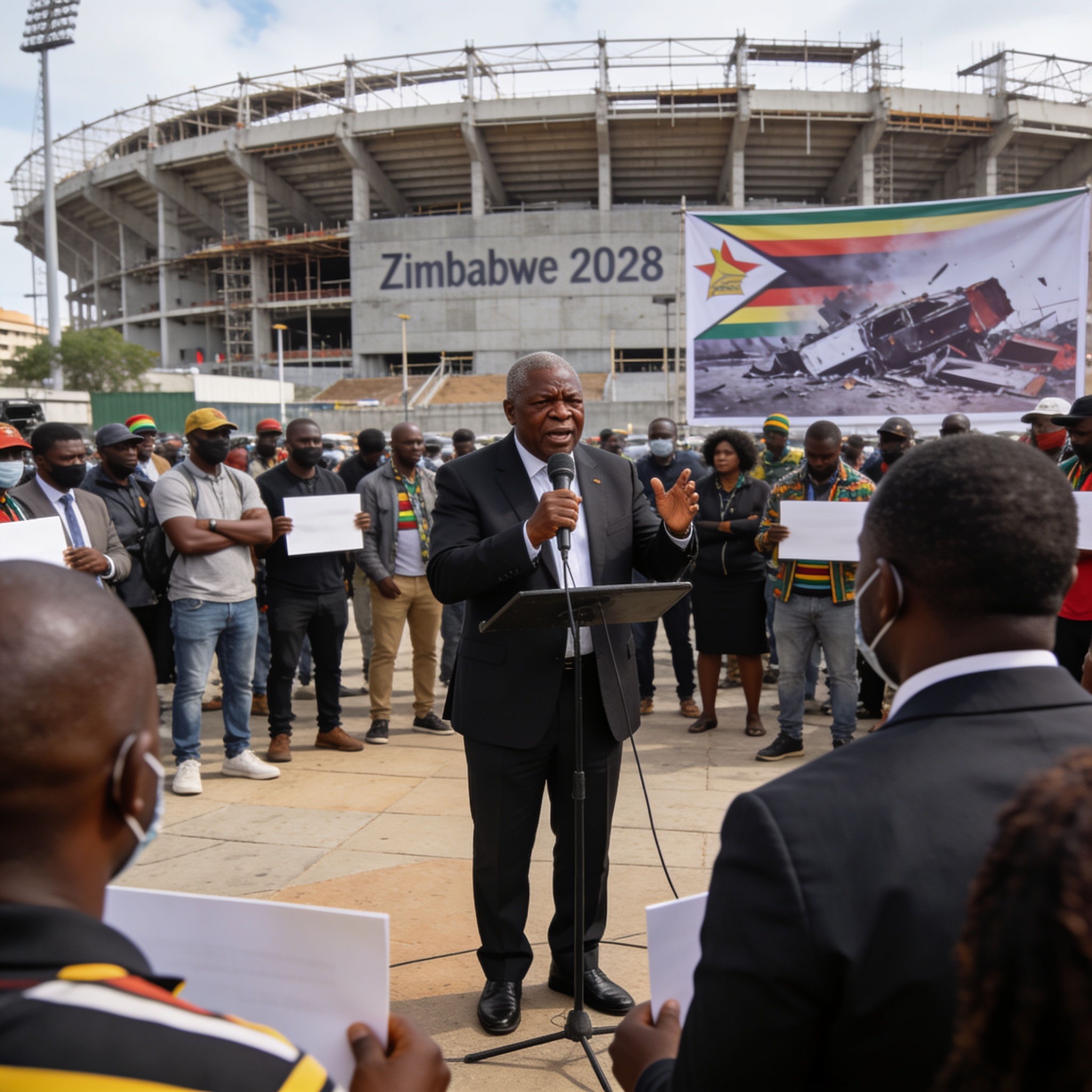
Gwayi-Shangani is the most visible example of a much wider pattern. Zimbabwe’s 2026 Infrastructure Investment Programme disclosed that an audit had identified 226 incomplete government construction projects — universities, roads, dams, clinics and offices that were started, partially funded and then left standing.
At the National University of Science and Technology in Bulawayo, the Central Library sat at roughly 30 percent completion for about two decades before construction resumed in 2024, meaning generations of students graduated without the facility public money was meant to deliver. The Bulawayo–Nkayi Road has been traced to the early 1990s and remains unfinished, with only a fraction of the route widened and surfaced. Construction of Gwayi-Shangani Dam itself began in 2004, followed by completion targets that came and went.
The pattern repeats in healthcare, where procurement of radiotherapy equipment is only the first step in a chain that runs through installation, commissioning, trained staff, consumables and dependable electricity before a patient actually receives treatment.
Why starting beats finishing
Treasury’s own diagnosis points to poor project preparation, delayed disbursements, weak supervision, cost overruns, arrears, inadequate contractor capacity, scope changes, inflation and currency instability. Corruption is often offered as the single explanation, and credible allegations deserve investigation, but it does not account for the whole machinery of failure.
Political incentives do part of the work. Breaking ground brings a ceremony, a speech and immediate visibility. Completion is slower, quieter and often credited to a different administration. When funds are spread across an ever-growing list of sites, work stops, inflation raises the outstanding bill, and another allocation is announced. The project eventually becomes too expensive to abandon and too poorly financed to finish.
The cost of standing still
An unfinished project is not an empty one. It holds land, materials, labour and professional fees, and it keeps absorbing money through deterioration, vandalism, remobilisation and redesign. The social return used to justify it never arrives. Money trapped in an unusable structure cannot pay for medicines, classrooms or road repairs at the same time.
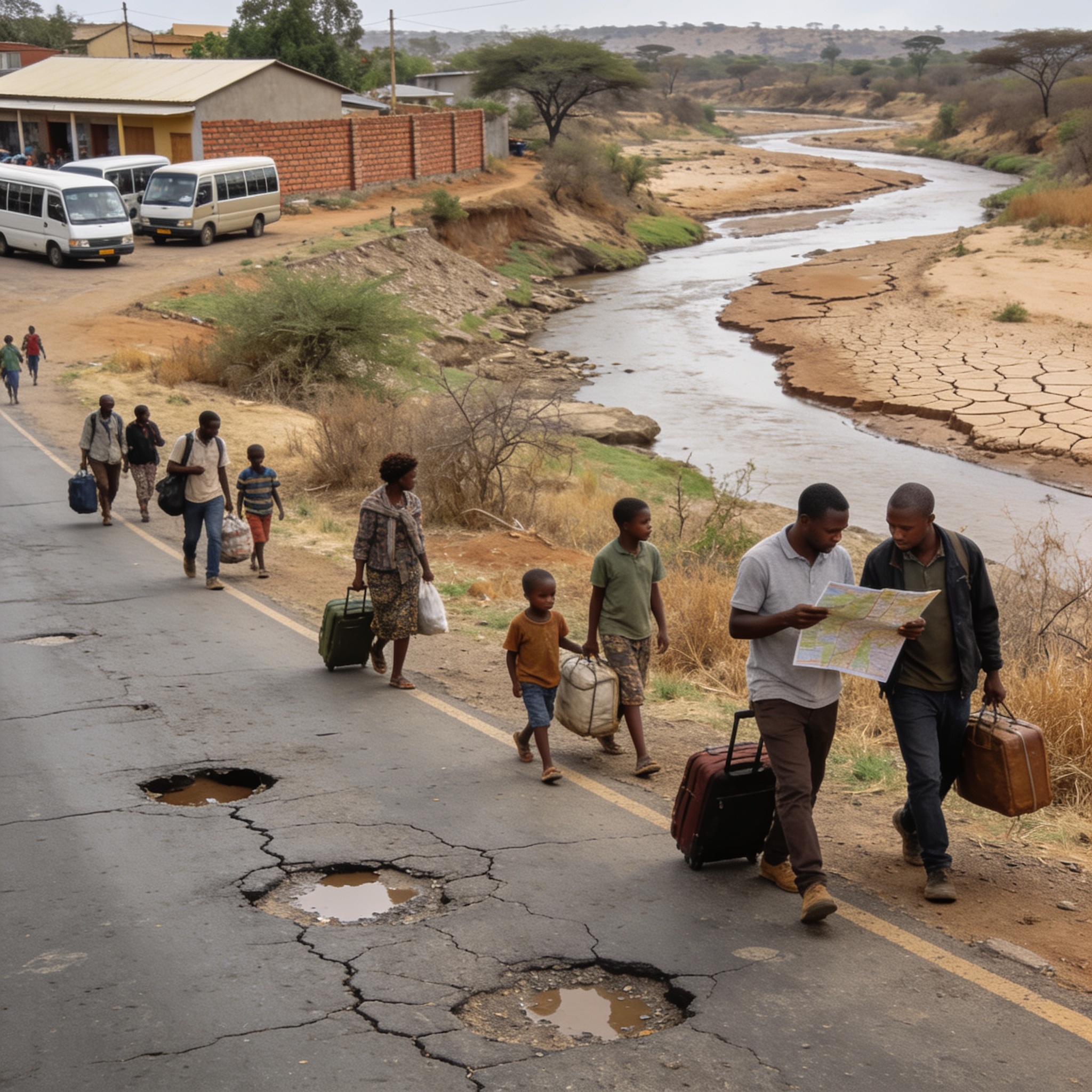
For Bulawayo, the stakes are immediate. Water security underpins household supply, industry and irrigation across Matabeleland, and a completed dam without a completed pipeline delivers none of it. Closing that gap requires a funding mechanism that treats the pipeline, pumps and treatment works as one project rather than three afterthoughts.
More broadly, the fix being urged is a discipline of completion: a public, searchable register for every major state project showing the responsible institution, contractor, original and revised costs, allocations, cash released, physical progress and operational status. Budgets would then prioritise viable schemes nearing completion before new starts, and projects that no longer make sense would be reassessed, redesigned or formally cancelled rather than left suspended indefinitely.
Development, after all, is not what is announced or budgeted. It is what residents can enter, travel on, drink from and be treated in — and by that measure, Zimbabwe still has a long stretch of road, and a very long pipeline, ahead of it.