Zimbabwe’s wastewater infrastructure is no longer merely strained — it has effectively broken down. A report tabled in Parliament by the Portfolio Committee on Environment, Climate and Wildlife has established that just 20 of the country’s 63 sewage treatment plants are operational, leaving an estimated 570 megalitres of untreated or partially treated effluent flowing into rivers, dams and wetlands every single day.
The findings were presented on Thursday following an inquiry into pollution hotspots across Harare and Chitungwiza, a study prompted after the Environmental Management Agency (EMA) invited legislators to see for themselves how badly municipal wastewater systems have deteriorated.
Harare’s Network Is Collapsing Under Its Own Weight
The committee directed most of its attention at the capital, where the City of Harare manages a sewer network stretching beyond 5,500 kilometres. That system depends on seven strategic pump stations — Budiriro, Avonlea, Chisipite, Fidelity, North Eastern, Marlborough and Bradfield — feeding seven primary treatment works, among them the flagship Firle and Crowborough plants.
In theory, those works can handle a combined 219.5 megalitres of sewage per day. In practice, rapid urban population growth and decades of neglected maintenance have left them largely incapable of performing that job, according to evidence gathered from EMA, Harare City Council and Chitungwiza Municipality.
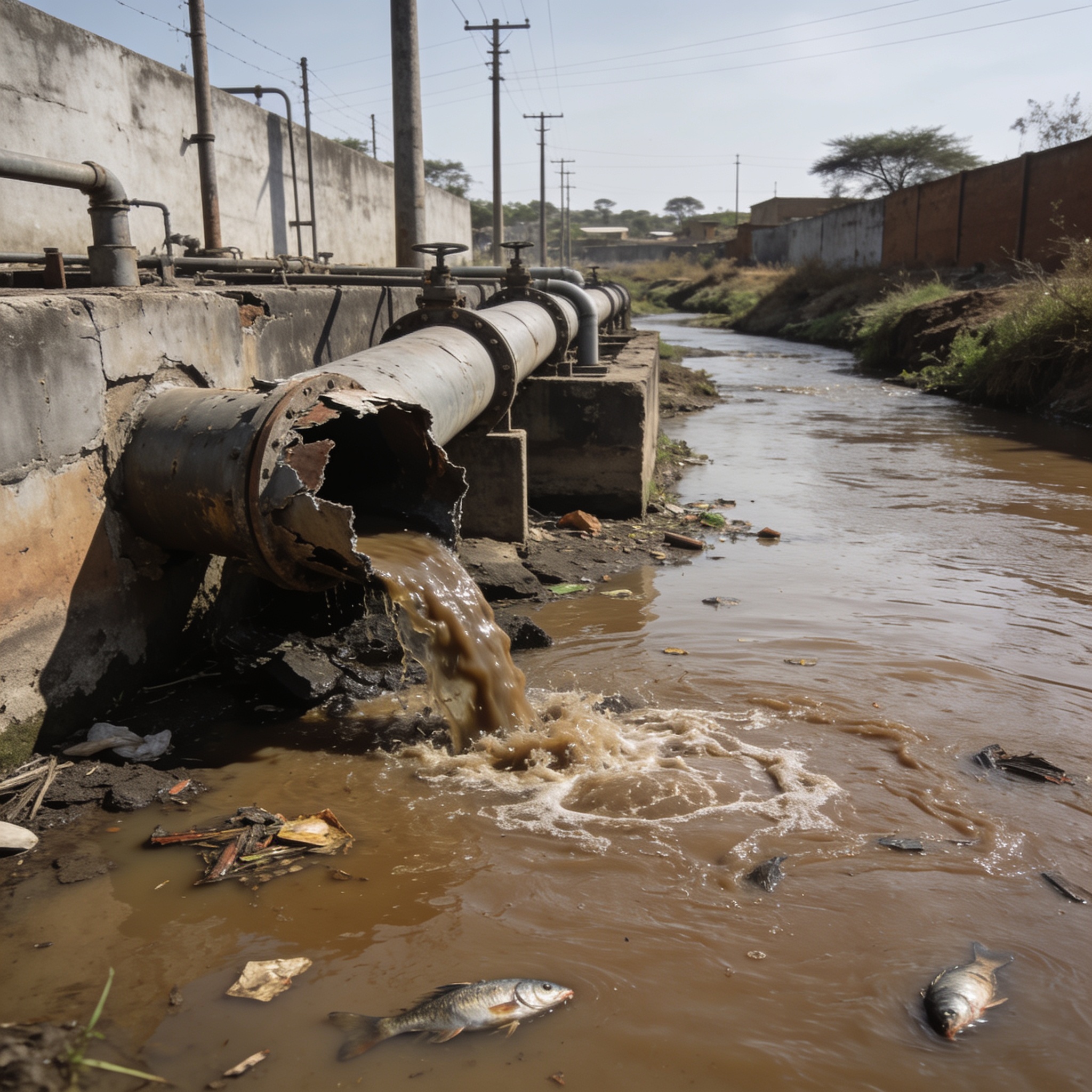
Site visits by the committee exposed specific, long-standing failure points. The most serious is at Amalinda Crossing, where trunk main pipelines have reportedly been collapsed for more than fifteen years. That single defect is responsible for roughly 80 megalitres of raw sewage spilling directly into the Mukuvisi River each day — a waterway that empties into Lake Chivero, the capital’s principal source of drinking water.
Turbidity Six Times Above Safe Limits
The committee also reported that rivers running through urban areas now carry an average turbidity of close to 30 Nephelometric Turbidity Units (NTU), against a healthy benchmark of five NTU. That six-fold overshoot signals heavy loads of suspended silt and solids, which starve aquatic plant life of sunlight and physically damage the gills of fish.
The implications extend well beyond ecology. Wastewater contamination of the sort described in the report is directly linked to cholera, typhoid and other waterborne outbreaks, and it undermines the treatment of drinking water drawn from the same polluted sources.
A Crisis Concentrated in the Metropolitan Belt
Although the report notes that the failures are most acute in and around Harare, the underlying problems — ageing plant and equipment, ballooning demand, and chronic underfunding of maintenance — are national in character. Chitungwiza’s submissions formed part of the same inquiry and painted a similar picture of overwhelmed infrastructure.
What the committee has effectively documented is a system where the volume of waste generated has outgrown the capacity to treat it, and where the remaining gap is discharged straight into the environment rather than being managed.
What Comes Next
The report is now before Parliament, placing pressure on central government and local authorities to explain how rehabilitation will be financed. Rehabilitating trunk mains, replacing collapsed pipes and restoring treatment works at Firle, Crowborough and the smaller plants would require substantial capital investment — money that municipalities, many of them already failing to collect rates and deliver basic services, do not have.
The Environmental Management Agency, which triggered the inquiry, is one of the agencies with a statutory mandate to police water pollution. Its decision to bring legislators to the polluted sites appears to have been calculated: shifting the issue from regulatory correspondence into the parliamentary record makes it harder to ignore.
Without urgent intervention, the arithmetic in the report is stark. With only a third of the country’s treatment plants functioning and more than half a billion litres of raw effluent entering rivers daily, Zimbabwe’s clean water supply and public health will continue to be compromised at the source. The question is no longer whether the infrastructure has failed, but how long the consequences can be absorbed by the communities living downstream of it.