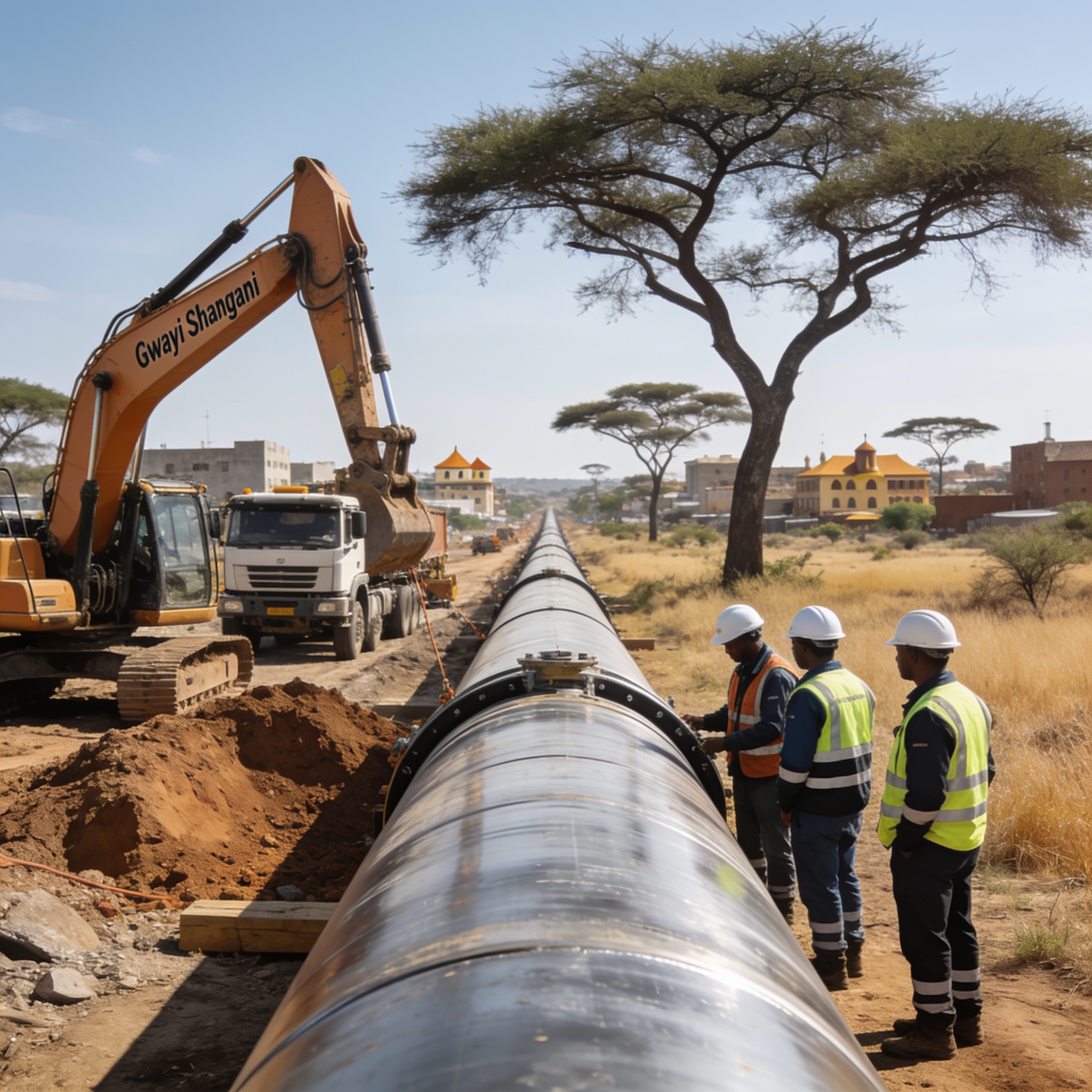
Bulawayo’s hope of drawing water from the Gwayi-Shangani Dam could remain unmet for generations unless the Government accelerates spending on the pipeline designed to carry it to the city, Bulawayo Mayor David Coltart has warned.
Coltart said the 252-kilometre conveyor — the backbone of the long-running National Matabeleland Zambezi Water Project — would take 217 years to complete if Treasury keeps disbursing funds at the rate recorded last year.
A funding rate that stretches into the next century
The mayor’s calculation followed a recent Zimbabwe National Water Authority (ZINWA) estimate putting the pipeline’s cost at about US$543 million. Against that figure, he noted that only around US$2.5 million was released for the project last year, leaving no clear picture of where the remaining money will come from.
“If that disbursement rate isn’t improved, it will take 217 years to build the pipeline,” Coltart said, adding that the City of Bulawayo’s overriding interest is the delivery of raw water rather than any single component of the wider scheme.
He made the remarks after receiving news that civil works on the 10-megawatt Gwayi-Shangani mini-hydropower station in Matabeleland North are advancing and are expected to be wrapped up before year-end.
Dam races ahead while delivery infrastructure trails
The figures illustrate an unusual imbalance in the project: the water storage facility is far closer to completion than the system meant to move its water to consumers.
According to a project progress report dated 10 July 2026, the dam stands at 72.4 percent complete. The pipeline, by contrast, is only 16 percent built, and the booster pump stations are 18 percent done.
The same report values the four main contract packages at US$554.44 million, broken down as follows:
- Pipeline construction: US$175.14 million
- Pump stations: US$167.73 million
- Pipe supply: US$130.33 million
- Water treatment plant: US$81.25 million
Construction of the pipeline was awarded to 12 contractors in March 2022, with each responsible for roughly 21 kilometres. Work stalled later that year when funding became erratic, and it has never regained full momentum. Once finished, the line is expected to deliver 220 megalitres of water per day to Bulawayo.
Why the delay matters for Bulawayo
Bulawayo has for years endured some of the country’s most severe water rationing, with households and industry relying on strict schedules and ageing infrastructure. The Gwayi-Shangani scheme has long been presented as the permanent answer to that shortage, but the city cannot benefit until water can physically be moved from the dam.
Critics of the current rollout argue that completing the dam without a functioning conveyance system risks leaving a large public investment stranded. Coltart’s warning reframes the debate around financing rather than engineering: the technical plan exists, the contractors were appointed, but the money arrives too slowly to keep them on site.
Power station progress welcomed
The mayor did not dismiss the hydro station milestone outright. Describing the development as “wonderful news,” he said the mini-hydropower plant would add generating capacity in Matabeleland North, but stressed that from the municipality’s perspective the pipeline remains the priority.
The 10MW facility is designed to use water released from the dam, giving the project an energy dimension on top of its water-supply purpose.
What comes next
Attention now turns to whether Treasury will commit to a multi-year financing plan that lets contractors work continuously, or whether the pipeline will keep advancing in short, unpredictable bursts. Without a clearer funding schedule, the 217-year projection will stand as the uncomfortable benchmark against which progress is measured.
For residents in Bulawayo and surrounding districts, the practical question is simple: how soon will water from Gwayi-Shangani actually reach a tap, and who will pay to finish the job.