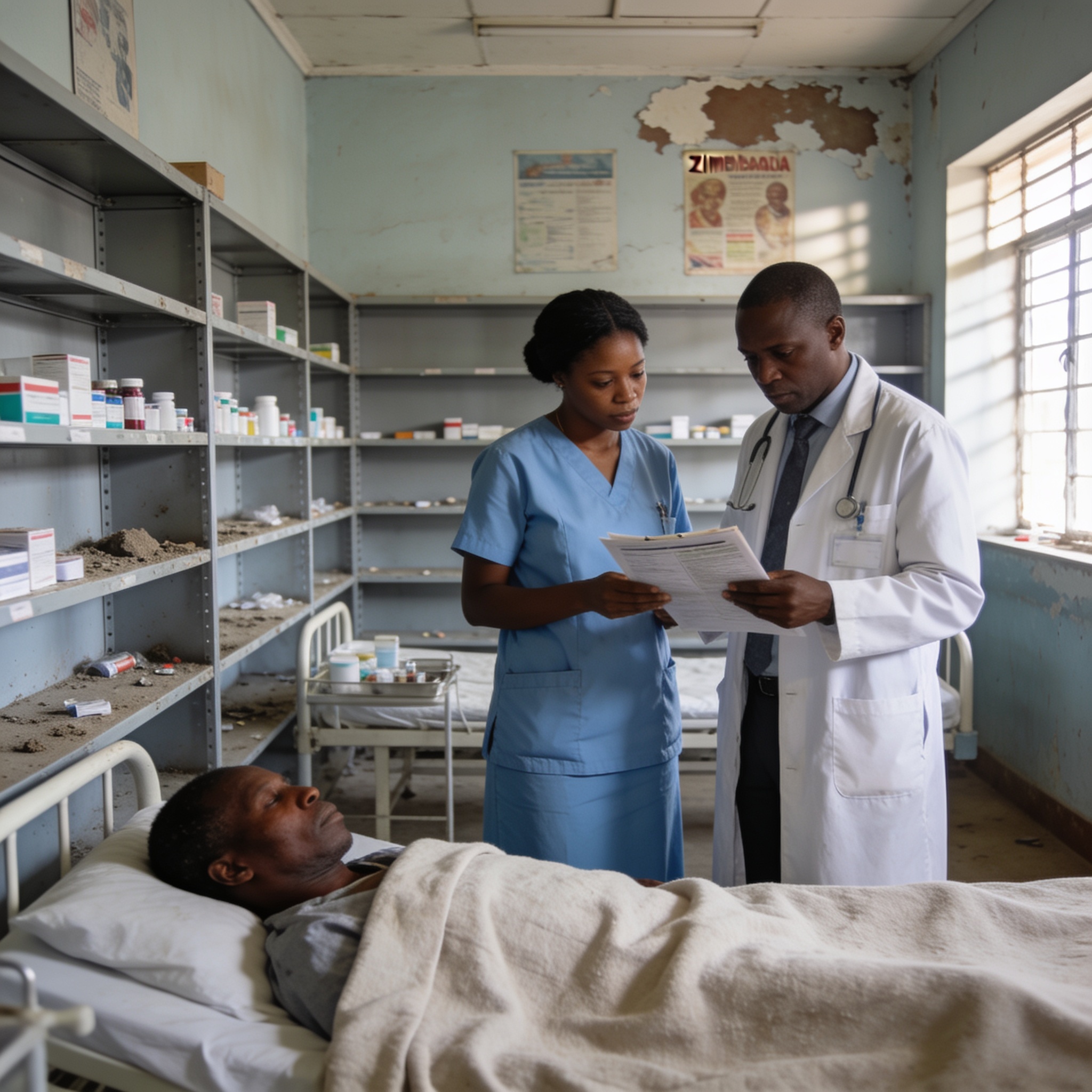
Zimbabwe’s public health delivery system is facing one of its most severe medicine shortages in recent years, a crisis that a parliamentary watchdog has linked directly to unpaid bills by government health institutions. A fact-finding mission to the National Pharmaceutical Company (NatPharm) warehouse in Bulawayo over the weekend laid bare empty shelves where essential drugs should be.
Public hospitals and clinics in Matabeleland are sitting on a combined US$2.7 million debt owed to NatPharm, the government-owned pharmaceutical procurement and distribution arm. The debt, which has been accumulating since 2024, has effectively starved NatPharm of the cash it needs to replenish stocks of life-saving medicines.
Members of the Parliamentary Portfolio Committee on Health and Child Care heard that even as health facilities continue to send orders under the Zimbabwe Assisted Pool System (ZAPS), they are not paying for previous deliveries. The financing model, which gives health institutions autonomy over how they spend government allocations, has created a situation where one state entity is crippling another.
The result is devasting. During the committee’s verification tour, basic drugs such as paracetamol tablets and injections were completely unavailable. Intravenous fluids, psychiatric medications and treatments for non-communicable diseases like insulin and carbamazepine were either out of stock or dangerously low. The widely used intravenous antibiotic ceftriaxone has only about one month of supply left, while metronidazole IV is already exhausted.
NatPharm officials told the MPs that in 2026 alone, approximately US$47 million is needed to procure essential medicines for non-communicable diseases, maternal and child healthcare, surgical supplies, and treatments for sexually transmitted infections. Donors and partners have so far pledged only US$6 million, leaving a gaping US$41 million hole.
The crisis comes amid growing frustration from patients. In some rural areas, patients have reportedly been told to resort to traditional herbal remedies due to empty dispensaries—a suggestion that has sparked public outrage. The government has not formally endorsed such advice, but the public health emergency is now impossible to ignore.
NatPharm’s Bulawayo depot, which services the entire Matabeleland region, is a stark illustration of the national problem. The parliamentary committee has vowed to accelerate its assessment of government strategies to recapitalise the pharmaceutical company, but the immediate outlook remains dire. Without urgent payment of debts and an injection of fresh funding, the country’s public health sector risks a complete breakdown in medicine supply.