
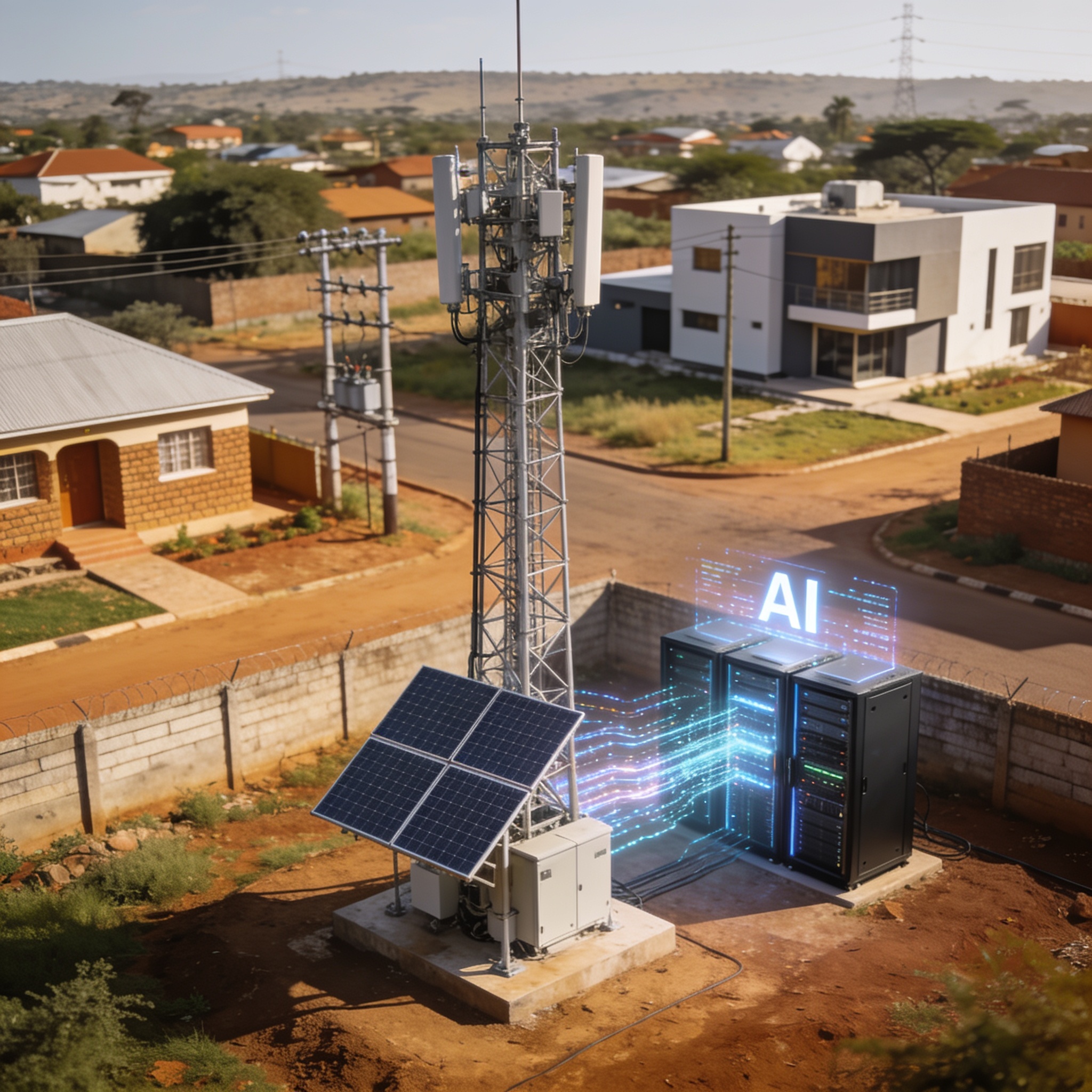
Econet Wireless Zimbabwe is rolling out extensive solar and battery storage systems across its network following an artificial intelligence (AI) analysis that identified power supply interruptions as the leading cause of service disruptions. The company says its AI engineers found that close to 60% of network faults are triggered by electricity supply issues, ranging from prolonged blackouts to brief power fluctuations that last only a few seconds.
These power problems have been affecting base stations, switching centres and data centres, resulting in dropped calls, slower internet speeds and interruptions to digital services. To address the challenge, Econet has begun installing solar power systems and long-duration battery storage at critical network sites. The aim is to provide sufficient backup capacity to keep essential equipment running during power cuts and voltage fluctuations.
One of the most ambitious components of the programme is a planned 100-megawatt solar and battery storage facility that will supply electricity to the company’s switching and data centres in Harare. While Econet will remain connected to the national grid operated by ZESA, grid electricity is expected to become a secondary power source over time, with the company’s own renewable energy systems taking precedence.
Speaking on the initiative, Econet InfraCo chief executive officer Fayaz King said implementation is progressing well. “Work is advancing very well on all fronts, and we expect to have this locked down within six months,” King said. “By this time next year, we expect to have reduced power-related network faults to less than 10%.”
The move is part of Econet’s broader strategy to use AI to identify and resolve factors that affect network performance and customer experience. By analysing data from across its infrastructure, the company has been able to pinpoint specific issues and deploy targeted solutions.
Zimbabwe has faced chronic power shortages in recent years, with load shedding and faults affecting businesses and households. For a telecommunications provider like Econet, reliable power is critical to maintaining service quality. The company’s shift towards solar and battery storage not only improves network resilience but also reduces its dependence on an unstable grid.
This initiative underscores the growing role of technology and renewable energy in Zimbabwe’s quest for reliable connectivity. As the country’s largest mobile network operator, Econet’s investment in solar infrastructure could also serve as a model for other sectors grappling with power challenges.